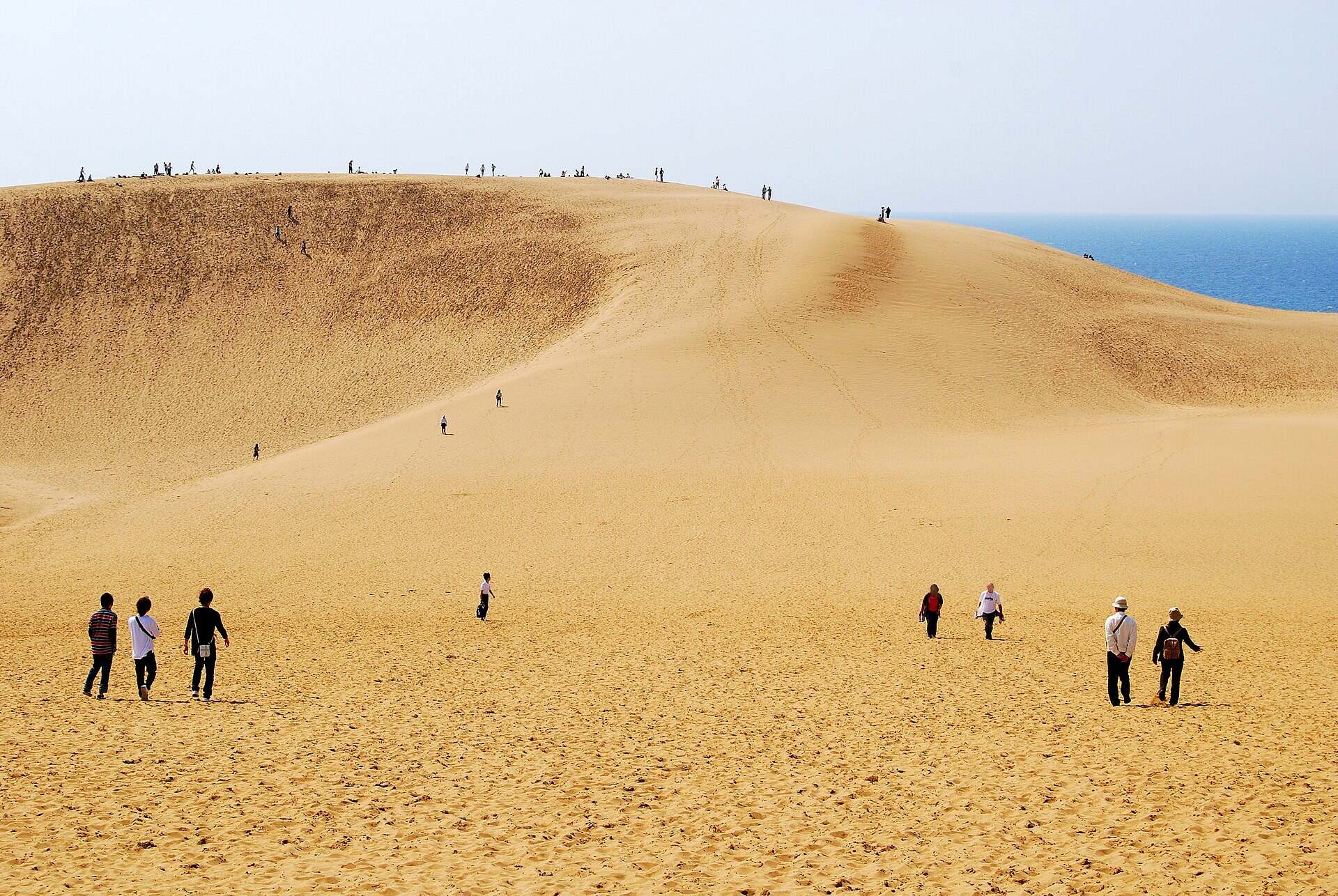
The Tottori dunes punish the lazy itinerary. Arrive midday in August and you get hot sand, a queue for the camel photo and your own footprints already everywhere. Arrive at the right hours, dawn on the sand, museum at opening, coast in the afternoon, and the same sixteen square kilometres feel like a private Sahara with a sea view. Here is that day, from either direction.
Getting there: the Super Hakuto does the work
From Osaka or Kyoto, the Super Hakuto limited express runs direct to Tottori in about 2.5 hours from Osaka, 3 from Kyoto, through the Chizu valley's bamboo and river gorges, a genuinely pretty ride, sit left going north. JR Pass holders note: the middle section is a private line, so a small supplement applies with the national pass, or it is fully covered by the regional San'in-Okayama pass. From Tokyo, skip the five-hour rail relay and fly: ANA serves Haneda-Tottori in 75 minutes, and the airport is literally named "Tottori Sand Dunes Conan Airport," ten minutes from the sand.
At Tottori station, the Loop Kirinjishi bus circles station, dunes, Sand Museum and the main sights on weekends and holidays, with regular city buses filling weekdays; the dunes stop is about 20 minutes out. The one-day pass pays for itself on the second hop. Taxis quote fixed, reasonable rates to the dunes and will happily wait while you climb.
07:30, The bowl, empty
Enter from the main viewpoint and the field drops away in front of you: the great bowl, the oasis pond at its bottom, and beyond it the 50-metre main ridge locals call the horse's back (uma no se). Cross the bowl, twenty minutes of satisfyingly effortful sand, and climb the ridge line to the crest. The far side is the moment: the dune falls straight to the beach and the Sea of Japan fills the horizon. Early light rakes the wind ripples; your tracks are the first of the day. Allow two hours for the full wander, and take water even in spring, there is no shade whatsoever.
10:00, Camels, boards and thermals
Back at the entrance the day's apparatus is setting up. The camel rides are short, posed and proudly kitsch, the photo-with-camel option is cheaper than the ride and honestly the better product. Sandboarding schools run morning and afternoon sessions on the steeper faces (book ahead in summer), and on fair days the paragliding school launches from the crests: brief lessons, soft landings, the one place in Japan where your first flight ends in a sand drift. Choose one; doing all three turns the day into logistics.
The dunes sit inside the San'in Kaigan UNESCO Global Geopark and are patrolled: no graffiti in the sand (a finable offence), no fireworks, no taking sand home. Shoes off is the local style for the bowl crossing, the sand is clean and cool until mid-morning. Summer afternoons it hits 50 °C at the surface: sandals, hat, and do the climb before ten or after four.
11:00, The Sand Museum: art with an expiry date
Two minutes from the entrance, the Sand Museum is the world's only museum devoted to sand sculpture, and the dunes' smartest idea. Each year a curator invites an international team to carve one themed exhibition, a country, a civilisation, from thousands of tonnes of compacted dune sand: palaces, battles, portraits ten metres tall, carved to a detail that seems to break the material's rules. The show stands for one season, then it is bulldozed back into the hill and the next one begins. Give it a full hour; the balcony level, where you look the statues in the eye, is the part nobody skips.
12:30, Lunch, then east to the blue half
Eat near the dunes (the nijisseiki pear soft-serve is the mandatory dessert, Tottori invented the pear) or back in town. Then point east: fifteen minutes along the coast road, the sand ends and the Uradome coast begins, a ria shoreline of pine-topped stacks, arches and coves with water clear to the kelp beds. The sightseeing boats from Uradome port run 40-minute loops past the best of it, March to November; the sea-kayak outfits get you into the caves the boats only point at. In summer, Uradome's white-sand swimming beaches are the day's second act all by themselves.
17:00, Castle walls, crab counters
Finish in town. The Tottori castle ruins climb the hill behind the prefectural office, stone ramparts, the elegant Jinpukaku villa at their foot, and a twenty-minute path to a terrace over city, dunes and sea. Then dinner: from November to March this is matsuba crab country, the San'in's winter religion, and the counters around the station take it seriously (reserve in season). Off-season, Tottori wagyu and the sushi of a working fishing prefecture fill in without complaint.
The variations
Winter: January and February cold snaps dust the dunes with snow, sand, snow and sea in one frame, usually gone by noon; check the dune webcams at breakfast and run. With two days: head west, Hakuto beach and its white-hare shrine, Kurayoshi's white-walled storehouses, the radium baths of Misasa onsen, and Mount Daisen's volcano profile for a proper hike. That second day is where Tottori stops being an excursion and becomes the quiet Japan people say they are looking for.